Fiction (Short)

Dilyku

Emia stood at the edge of the field and pretended she wasn’t shaking. It only worked because no one was there to see her. It was obscene. All of this. The fear. The anger. The dread. It had been an accident, a mistake. The sort of thing that could always happen when you tried to train a creature like Dilyku, no matter how careful you were and how many precautions you took.

A twinge of pain shot down her arm. Phantom pain, it had to be. The healer had promised that her wounds were all fully knitted back together. But the healer was only trained in treating the body, and Emia suspected her injuries ran deeper.

The easiest thing to do would be to turn around and walk away. The safest thing would be to pack her few belongings and begin the long trek back to her village, her family, her friends. She wouldn’t be the first. She wouldn’t be the last. It took almost as much luck as it did skill to complete the training, and no one expected her to stay. Better to accept failure and live than to try and try until she died in the attempt.

But.

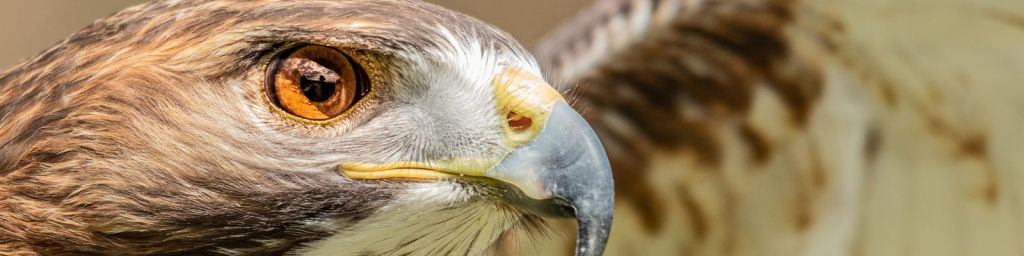
What if one more try was all it took? They had been so close, she’d felt it. She’d met Dilyku’s golden hawklike gaze and held it, held him, connected with him, and he had let her. He had bent his neck, and she had run her hands down the soft, long feathers, had traced the curve of his beak with her fingers. And then—

Then, disaster. Or so they told her; her own mind still refused to release those memories to the rest of her, though they bled through in her dreams. Too much noise, too much panic. A flurry of wings, claws, feathers. A gryphon’s fear takes on a deadly shape. Though, why Dilyku was afraid they couldn’t say.

Yet she had survived. And she had healed. And there was nothing in the world to stop her from trying again, save perhaps a nascent sense of self preservation. Because there was no reason to believe she would be so lucky if it happened again. And neither was there any certainty that it wouldn’t happen again.

And so she stood at the edge of the field, the one that stretched between her and Dilyku’s cave, and she trembled. A minute passed. Or ten. Or twenty.

Why?

The question rattled in the back of her mind.

Why are you doing this?

Her own thoughts stood in accusation. There were so many she’d left behind to come here, so many who were waiting for her to return. So many who would tell her she had tried hard enough, more than hard enough. So many who would welcome her back with open arms.

So many to whom she owed so much.

That was almost what decided her. Her life was not her own– not just her own. If the only thing driving her back across that field was her own pride, her own stubborn will, then that was not enough. It would never be enough. It never could be.

Yet even then she couldn’t just turn and walk away, because that would have been terrible, too. Maybe it was Dilyku’s claws and beak that had come so close to ripping her away from this would and flinging her into the next. That was just one, terrible thing, and there were other moments. So many other moments. Enough that she could never just leave, not without trying one last time.

She lifted her fingers to her lips and whistled, three long, clear notes. It was a request, she realized. A petition for Dilyku to grant her passage into his realm. He had only ever granted it with some amount of grudging impatience, a clacked beak, a thrash of his lion’s tail, as if he had better things to do with his time but couldn’t be bothered to drive her off.

And so when his call, shrill and fierce as any bird of prey’s, warm and friendly as the response of an old companion echoed back across the field, it was the last thing she expected. And when Dilyku himself leaped from the mouth of his cave and into the warm sunlight to look for her, she hardly expected that either. And she knew. For at least a little while longer, she had to stay. Because she had already left this other friend alone too long.
Musings

[Blog] Experience

I tend to be the sort of writer who responds to the ubiquitous advice to “write what you know” with “yes, but”. Mostly because a lot of people use it a bit too literally, and I like writing science fiction and fantasy. But despite the caveats, it is good advice. I would find it difficult at best to write a story focusing on the specific and personal experience of being a parent, and setting it in a Colorado town all but identical to the one I live in now wouldn’t really help. But on the same token, I could write a story set in the strangest and most far flung world I can imagine, dealing with themes of trust and friendship, and I think it could be a really good story.

So maybe that’s why, when something happens and I find myself in a situation that is… less than ideal, I’ve comforted myself more than once with the thought that I can channel the experience into some future story. Bed bugs in a cheap hotel? I bet there’s some kind of pest on that distant, crumbling space station. Made a mistake at work and can’t stop beating myself up about it? Maybe if I can get a character to work through their own mistakes I can borrow some of the tricks that worked for them. If I do it right, it should all help my writing be that much better. And that means even the hard things in life just give me a bigger pool of experience to draw from.

Musings, Uncategorized

[Blog] Rest and Slow

Sometimes, it’s hard to rest. Perversely, this is most often the case when we need it most. It’s one thing to find yourself easily distracted and to have trouble focusing on the tasks at hand– but those breaks aren’t rest. Not really. It’s something entirely different to take a purposeful step back and say ‘now is not the time for work’.

There’s a reason one of the ten commandments is the one about keeping the sabbath.

So, here’s to rest. And taking the time to recover, to refocus, to accept our human weakness before getting back to it. Because sometimes that’s what we really need.

Musings

[Blog] Setting Switch

It’s an interesting exercise to take a character from the setting they originally existed in and to insert them into one that’s entirely new and different. By which I don’t mean just taking Aragorn, son of Arathorn and putting him on the bridge of the starship Enterprise (which… actually, no. That would be terrible. I think he’d fare better on Tatooine instead.) But rather, imagining what he would be like if the character that is Aragorn had always existed in some other world.

The move isn’t always smooth. In good writing as in real life, the setting informs the characters and makes them who they are. And moving a character that started their life as (more or less) a Redwall fan character, turning them human, and dropping them into a world that is not ruled by constant skirmishes between woodlander and vermin means that you have to find the core of their character and figure out a way to keep it intact while changing everything else.

Some characters come out on the other side better than others.

But if it does nothing else, it will absolutely force you to look at them from another angle. And maybe that’s enough to knock loose some of the tropes and cliches you’ve been relying on without thinking about them, and if it can do that, then maybe you’ll find out something new about them and, in the process, discover a way to make them an even better character. Either way, it has the potential to be a very enjoyable process.

Musings

[Blog] Finishing Books

When it comes to reading, I can count on one hand the books (fiction, specifically) that I’ve started and left unfinished. And one of those wasn’t so much abandoned intentionally as forgotten about when a new school semester started. There’s a part of me that is, admittedly, kinda proud of this. But that being said, I’ve been wondering lately if I might not be better served by being more willing to make the call that a book isn’t working for me and letting it go to the Did-Not-Finish pile.

Of course, a part of this is that I don’t generally start books I don’t have a good chance of liking. Fair enough– I don’t think there’s many people who would pick up a book to read with the assumption that they’ll hate it. And a large majority of my reading list is made up of books recommended to me by friends who generally have a good feeling for what I’ll like and what I probably won’t. Which, maybe, explains why the two books in recent memory that I was tempted to put down (but didn’t/haven’t) were both ones I picked up on the recommendation of strangers and stuck with on the Principle Of The Thing.

Or, in other words, because I was too stubborn to put them down and switch to something else.

And to some extent, I think that stubbornness serves me well. Sometimes a book takes a little while to get going, and then something click into place and you can’t put the darn thing down because you find that it’s the most engaging thing you’ve read in months. But sometimes it’s just not going to happen, no matter how much of the story you slog through. And that’s where I run into trouble, because I will force myself to finish a book for the sake of finishing it, when perhaps it would be wiser to put it down and, if I care enough, look up the ending on Wikipedia.

So, the next time I run into a book that I just don’t find myself enjoying, maybe I’ll try putting it down and accepting that it’s not for me.

Maybe.

Musings

[Blog] Update — March ’23

It’s March! And here in Colorado, it’s apparently still winter, judging by the snow falling outside my window right now. Not that I’m complaining; I’ve been in dire need of real seasons for years and it’s so nice to see the world change around me as the days pass.

On the writing front, I’d like to point out that 11:45pm on February 28 is still, technically, February, and so that still counts as posting up a story– or part of one, more on that below– every month. Maybe I’m grasping at straws. But! It’s more writing than I posted up last year, and certainly it’s more regular than last year too. Correspond (I) is actually the story I was working on for January before running out of time, and I suppose it’s fair to say I ran out of time in February, too. And, technically, it’s not done. The first part is, and that’s what’s posted. The second (and… third?) parts will actually be going up in the next weeks. I could lie through my teeth and say that I planned to post it up that way from the start (I didn’t) because I thought it would be cool to build in a delay that interacts in an interesting way with the story itself (I do), but clearly that cat has escaped the bag. Plus, what I ended up with when I finished Part 1 doesn’t quiiiiite line up the way I’d hoped. That being said, I really like some of the ideas I was playing with and I enjoyed writing it. And, of course, I hope you enjoy reading it and the parts to come.

As for reading, I did a little less of it last month compared to January, but still managed to finish several books, including Brandon Sanderson’s The Lost Metal and Sea of Tranquility by Emily St. John Mandel. For the former, it’s everything I’ve come to expect from a Sanderson conclusion (high stakes, wild adventure, poignant moments) mixed in with a huge dose of Cosmere lore. Which I’m actually a little divided about. On the one hand, it’s super interesting and I’ve read enough Sanderson to really enjoy the cameos and the throwbacks. On the other, I think it stole some thunder from Wax and Wayne and the gang. The characters, though, and their growth and their arcs were fantastic, probably his best so far.

And then Sea of Tranquility. Fairly short, very beautiful. Without giving things away, I’d say it reminds me a bit of Connie Willis’ Oxford Time Travel stories, just a smidge more dystopian in the overarching setting. But just a smidge, and not oppressively so. It can be a fairly quick read, but I took my time with it, and enjoyed it the better for it.

Anyway! Keep an eye out for further parts of Correspond, as well as more writing/reading/life related rambling. And enjoy the end of winter! It’s coming!