Birthright Armenia, Musings

[Blog] Week Eleven, Old Churches

BIRTHRIGHTHEADER

If I could change one thing about the Birthright excursions, it would be to spend more time at each of the places we visit. Of course, barring manipulation of the spacetime continuum, that time would have to come from somewhere and would probably mean visiting fewer places. So perhaps that wouldn’t be the best thing to change, because I wouldn’t have wanted to miss any of these beautiful sites.

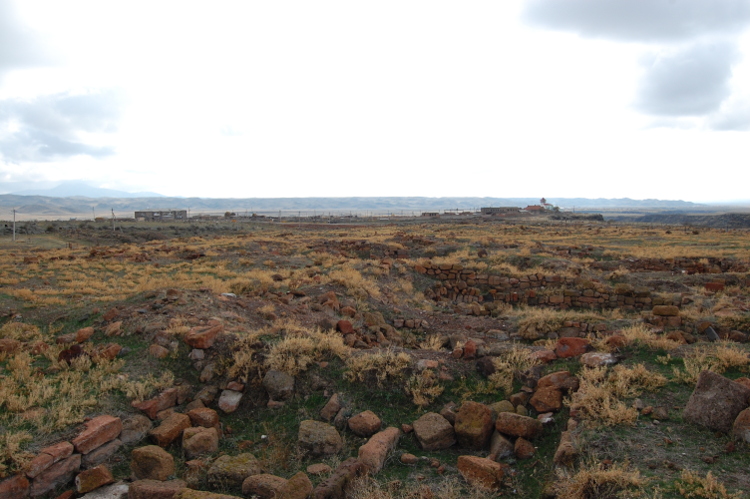
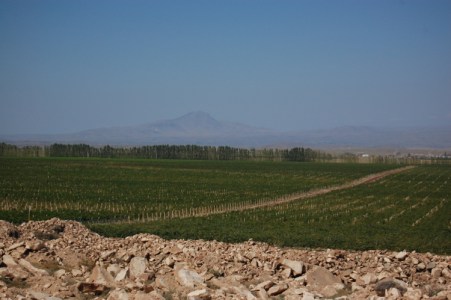
For our most recent outing, we started by visiting the Yereruk Basilica in Armenia’s Shirak province. It was a chilly morning, particularly after sitting still for the two hours or so it took for the vans to drive from Yerevan to the village of Anipemza on the western border. A distant, cloudy haze filled the sky, as it often does here, somehow making the rocky plains around us seem that much wider.

0402.JPG
The landscape around Yereruk.

The Akhurian River and the closed border with Turkey are nearby, a reminder of the unfriendly political situation that the country faces. It adds a further bittersweet note to the visit, beyond the one that always seems to haunt old ruins.

The remains of the basilica are awe-inspiring on their own, though I can’t help wishing I could see it whole. The church is large enough that it’s clear it was central to a large community when it was constructed in the 4th and 5th centuries. It’s also one of the oldest surviving examples of Christian architecture in Armenia, which is why it was added to the UNESCO World Heritage Tentative List in August 1995.


From there, we climbed back into the vans to go to the village of Dashtadem where we were to have lunch, which we did in the home of one of the village families. I’ve talked before about Armenian hospitality, and this is another example of it. Birthright excursions started visiting this family after the staff went door to door, asking if anyone would be willing to host us. This family said yes, and now when we come this way, we eat with them.

The walls of the old Dashtadem Fortress stood just a few yards from the house, and after eating a wonderful meal of dolma and lavash we walked across the road to explore it. I think I was grinning the entire time. I’ve always loved castles, but living in the States means I don’t often* get a chance to actually see them. The original keep was constructed in the 9th century, and its enceinte was constructed in the early 1800s, with other additions being made in the years between.


From there, it was a short drive to the Cathedral of Talin. Like at Yereruk, the size of the ruins give a hint of the size of the community it served when it was built in the 7th century. It was built with two studies on either side of the apse, both of which contain a series of handholds that can be used to access the second floor and were used as a way to hide the church’s manuscripts when hostile rulers came with the intention of burning them all.


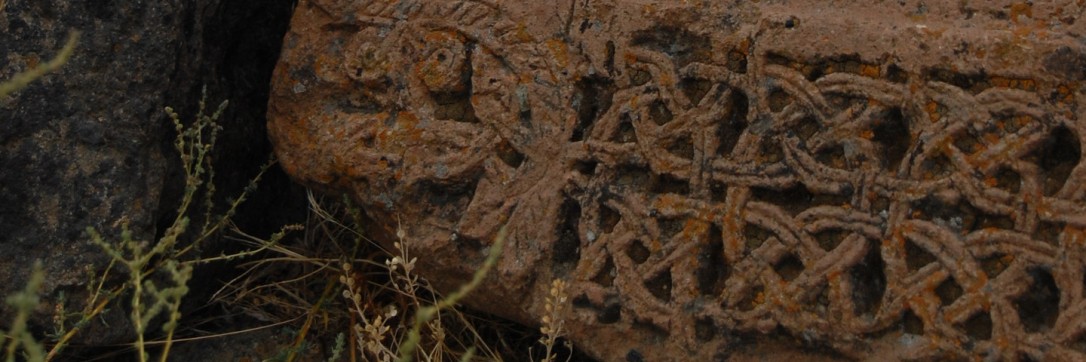
We finished the day with a short stop at Aruchavank. Like so many of the old churches here it suffered extensive damage from earthquakes, and though most of it has been rebuilt, its dome remains collapsed. The architecture of its eastern wall contains two examples of a type of engineering that provides the entire structure with greater stability, and our guide told us that another monastery using the same method was strong enough to survive even after its central pillars were cut by the Mongols under Tamerlane.


I love the fact that there are stories like this everywhere we go, that history in this region has been recorded for so long that the connection to the past is so much clearer than I am used to. And I know I’m only seeing and hearing a fraction of them. There is so much to learn, so much to discover. Armenia is such a small country, but it’s so wonderfully full.


* The only other time (so far!) was about seven years ago, when I had the chance to study abroad in the UK and Ireland, and our group visited Kenilworth Castle. I took hundreds of pictures, and if I remember right, my friend and I were late in returning to the bus.

Birthright Armenia, Musings

[Blog] Week Ten, Planting Trees

BIRTHRIGHTHEADER

This past weekend, our excursion was a little different. Instead of just visiting one of the countless, incredible sites of Armenia, we got to add something as well: we got to help plant three hundred fruit trees on the grounds of the Sardarapat Memorial.

This was my second trip out to the memorial in Armavir province. We took our first trip there back at the end of September when the weather was just starting to turn and the memory of a hot summer was still fresh in everyone’s minds. It’s hard to believe that that was only about a month ago. It feels so much longer.

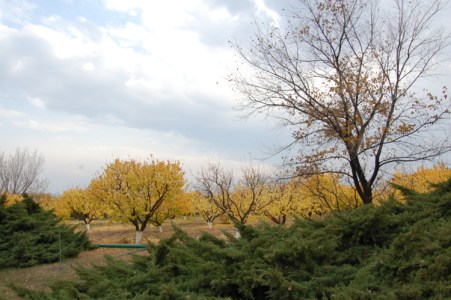
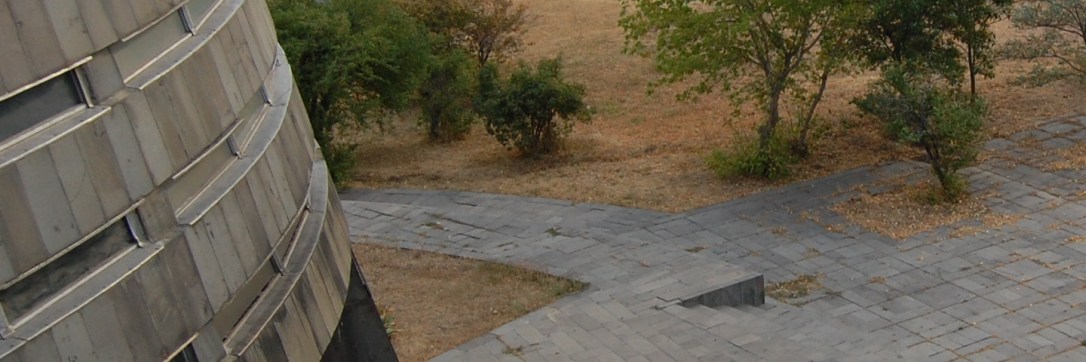
0369
Fall on the grounds of the Sardarapat Memorial.

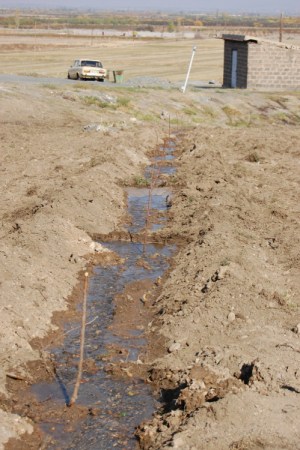
We met a group from the Armenia Tree Project (ATP) on a small plot of ground near the Sardarapat Museum. Trenches where we would be planting the saplings– apricot and plum– already lined the ground, and the young trees themselves lay spaced out where they were to be planted. All we had to do was set them in the ground, perhaps digging a little deeper into the rocky soil to provide room for the roots, and fill the space around them with dirt again. Then, we needed to build small dams below each sapling before watering each one with a bucket to welcome each tree to its new home. Last of all, the ATP workers would turn on the water and let it run down the rows, watering the trees once more after the first bucketful had settled them all into place.

0274
Trees in their new home.

It was early afternoon when we finished, and the bagged lunches that the Birthright staff passed out to us were more than welcome: big sandwiches, fruit, salad, gata (գաթա). We ate them sitting together on the ground just above the newly planted orchard. Afterwards, we had the chance to visit the museum and the memorial again, and I was happy for the more leisurely afternoon and the chance to take a few pictures that I hadn’t managed to on our first visit.


Excursions like this are my favorite part of this adventure. They are a chance to give back a little in addition to looking and learning. They make it easy to think about the future. Armenia is this strange mix of young and old; our history stretches back for thousands of years, but the Republic only gained its independence from the USSR twenty six years ago and is still working to find and make its place in the world. Working where I am with the people I am with, it’s not difficult to have an optimistic view of what that place might be. No one denies that there is still a long way to go, but the atmosphere is heady and excited. It’s going to be hard, but we can do it. We can get there.

From a purely writer-ish point of view, that’s the kind of thing I want to tell stories about. Hard odds and hope. Ups and downs and the difficult work in between. Ideas and ideals. It’s not just those more abstract concepts, either. As a writer of science fiction and fantasy (and anything else that lets me make up whole worlds of my own), something new sparks my imagination every day. The dichotomy of new and ancient means that centuries-old churches are as much a part of what Armenia is as the fact that the country is the “Silicon Valley of the former Soviet Union“. Kiosks throughout Yerevan let you renew your phone’s data plan and do a dozen similar things. The big intersection near where I live has no crosswalks, but if you take the steps down at any of the corners you find yourself in a kind of circular mall lined with stalls and stores and exits to the metro and the other side of the street.

I know I’m seeing the best Armenia has to offer, and though I’m aware of the worse parts of living here (low wages, government corruption, blockaded borders…), I don’t have to live them myself. Volunteering here for four months means that I get to experience life here in a way I couldn’t as a tourist, but four months is still just four months, a fraction of a year. It’s not enough time, for me, at least, to put down deep roots here. If I’m honest, I’m not entirely certain what I think of that.

Birthright Armenia, Musings

[Blog] Week Nine, Connections

BIRTHRIGHTHEADER

While last week’s adventures can best be described as big and grand, my favorite parts of the past few days have definitely been of the smaller sort. Which is not to say that the experiences are going to stick with me any less. In fact, it’s often these incidental experiences that work themselves most deeply into my memories.

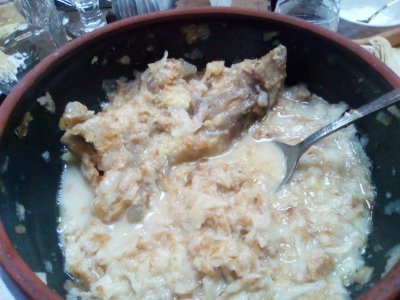
That being said, calling a khash party “small” is probably a bit misleading. Khash (խաշ) is a dish made by boiling sheep or cow’s feet to make a broth, which is then seasoned with garlic and salt to taste and given substance by crumbling dried lavash into it. It is traditionally eaten in the morning, and, in Armenia at least, only during months that have an “r” in the name. Vodka is often served as well, and you probably won’t feel like eating much else for the rest of the day.

Khash!

I got to enjoy the meal with a large group from Impact Hub Yerevan, the amazing coworking space where the Repat Armenia office is located. Or rather, I did once I double-checked the address and realized that I’d ended up at the wrong branch of the restaurant. It all worked out in the end–hunger and the nagging knowledge that you’re already late do wonders to keep you walking quickly–and the rest of the morning was spent enjoying each other’s company over tasty food.

That, I think, is one of my favorite things about being here. We love food and we love friends, and we make sure to eat food with friends every chance we get. And by “friends” we mean everyone from brand new acquaintances to lifelong companions. All those old stories: Beowulf. The Iliad. The Odyssey. Hospitality was deeply ingrained in those cultures as well, and there was an assumption that guests would be treated a certain way. After spending two months in Armenia, I think I understand it a bit better.

Another highlight of the week happened while I was shadowing at the hospital. It wasn’t medical in nature, and I’m still missing the chance to be more involved in that field, but that’s another topic for another day. What my time shadowing at Nork Marash has given me every day I’m there is an incredible immersion in the language, and earlier this week I got the chance to see how far I’ve come.

A family who had come in several times before came in again. At one point, the doctor stepped out of the room and I stayed behind. Since they had met me before, several of the family members knew that I was an American, and I heard them mention that fact to each other, which I took as an opportunity to mention that I did speak a little Armenian.

It was so much fun to talk with them. As soon as they knew I could understand, they asked me questions about where I was from and why I was in Armenia, and though I didn’t always know the exact word I wanted to use, we definitely got by. It was such a simple conversation, but the reminder that I’ve learned enough Armenian to make basic connections with strangers here has left me a little giddy all week.

Other than that, it’s been a fairly low-key week. A couple members of my language class are finishing up their time here, so we all went out to dinner together to celebrate (and practice our Armenian). It’s rained once or twice, and most of the trees are boasting beautiful yellow leaves. I’m about a week past halfway through my trip now, and while I miss everyone back home terribly, I feel a similar tug every time I think about leaving. I suppose the only thing to do is to savor every minute of the time I have left.

Updates

[Update] November 2017

HEADER

Happy November, everyone!

I have to admit, my feelings about this month are slightly mixed, as it’s National Novel Writing Month and I won’t be participating this year. Not that I didn’t think about it, of course. It’s just that if I tried, certain family members would (justifiably) confiscate my laptop. Maybe next year!

As for other writing, things are still moving along! October saw the completion of The Farewell, the short story I’ve been working on for the past while, and I’ve got a couple more in the works that I’ll post up here as soon as they’re finished. Blog posts about my experiences in Armenia should continue going up on Fridays as well.

And that’s about all! Thanks to all of you who have stuck with me so far, and to all of you who have wandered by as well! I hope you like what you’ve seen, and please feel free to let me know if you have any questions or comments on the stories or the blogs. I’d love to hear from you!

Until next time,
~ Faith

Birthright Armenia, Musings

[Blog] Week Eight, Artsakh

BIRTHRIGHTHEADER

Oh, man. Where to start. Our Artsakh trip was four days long, and I could almost dedicate an entire post to each one. However, in the interest of documenting my adventure in a timely manner (read: sometime this month), I’m going to try to fit it all in here. As always, let me know if there’s anything you’d like to hear about in more detail; I’ll be more than happy to oblige!

Before I start into what we actually did, I want to mention that Artsakh is one of the most stunning places I’ve ever been– and yes, that’s including Santa Barbara, Ireland, and northern Idaho. According to one etymology, the name Artsakh means “Aran’s woods”, with Aran being an ancient Armenian king. The other name commonly used to refer to the region is Nagorno-Karabakh, which translates as “mountainous black garden” from a mixture of Russian, Turkish, and Persian. Either one is accurate, though words alone hardly do justice to its fierce beauty. Hopefully pictures will help where descriptions fail.


Day 1

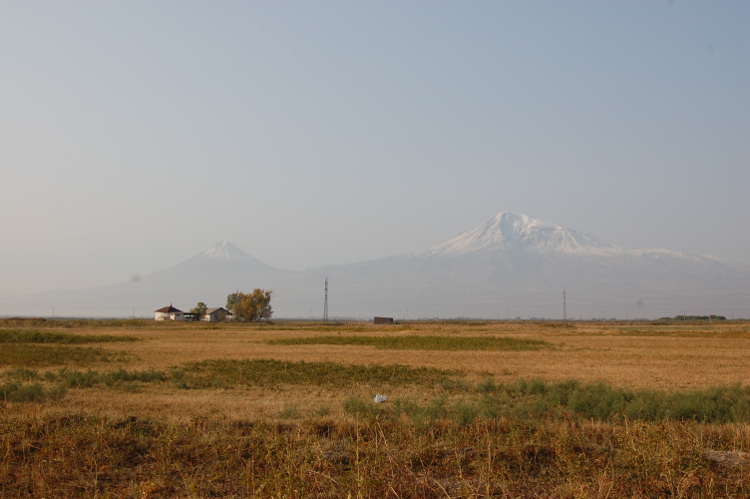
We left Yerevan at eight o’clock on Friday morning, starting our adventure by driving southwest to the Ararat Plain where we ate a breakfast of bread, coleslaw, and lakhmajun in a field with an incredible view of Greater and Lesser Ararat. Despite the vague fog that hung between us, the mountains were awe-inspiring.

0132
Mount Ararat (right) and Little Sister.


From there, we drove on eastward through southern Armenia. I stared out the window the entire time, watching as the landscape grew ever more mountainous and the director of our program shared a thousand different facts and bits of knowledge about the places we passed. We made a short stop at the Arpi Market to buy snacks and use the restrooms, and I took the opportunity to take pictures of the rocky hills and the beautiful Arpa River.


Our next stop was at the Wings of Tatev, the world’s longest non-stop double track cable car, which we took up to the monastery and village of Tatev. We ate a simple lunch of salami, cheese, cucumber, and tomato wrapped in lavash (Armenian flatbread), which we got to enjoy in the refectory between exploring the grounds. Much of the monastery itself is currently being rebuilt after suffering severe damage during an earthquake in 1931. While much of it is still variously damaged, Saints Paul and Peter Church has been reconstructed and our group was able to go inside and receive a blessing from the bishop before we crossed over into Artsakh.


It was well after dark by the time we finally reached Shushi. Group by group, the Birthright staff separated us by which Artsakhsi family we would be staying with, and our generous hosts received us and fed us and made sure we had everything we needed before sending us off to bed. Armenian hospitality is deeply warm and giving; I hadn’t thought it possible, but it was even more so in Artsakh.


Day 2

Our second day started with breakfast at our homestays: tea, bread, cheese, preserves, potatoes. Perfect fuel for exploration. Both of the other volunteers who stayed at the same house spoke Armenian, so we were able to talk with our host mom and share a little back and forth. I think my only regret from the trip was that our schedule was so packed that we had little chance to get to know her and her family more.


After that, we gathered at the Shushi Music Academy where we learned more about the conflict between Artsakh and Azerbaijan– a huge topic that I will not be able to do any sort of justice in this post. Please, if you’d like to hear about it, let me know and I’ll do my best to share what I’ve learned. We also got to hear about the work that the Music Academy is doing. The institution is a full academic school, though as the name implies it also focuses on music. In addition to teaching the students, they also provide instruments and two meals a day.

From there we made a short stop at the Tatik-Papik Monument just north of Stepanakert before continuing on to an army base outside the city. For obvious reasons, I have no pictures of the latter, but the experience was incredibly interesting. We had the opportunity to see two different types of tanks, shared lunch with the soldiers, and ran a part of the obstacle course they use for training.


Afterwards, we returned to Stepanakert and took part in a “winemob”, which is what it’s called when the ninety of us get divided up into groups of five and each group is given a bottle of wine and told to get ourselves invited into one of the surrounding apartments in order to get to know some of the people who lived there. The staff made sure that each group had at least one person who spoke fluent Armenian, sent us all towards specific buildings, and gave us a time to be back at the buses, but beyond that, left us to our own devices.

It’s not the sort of thing I can imagine doing anywhere else. If I’m honest, I had a hard enough time imagining it in Stepanakert. But I’m afraid I might be giving the wrong impression. Despite my introverted misgivings, this was one of the most wonderful experiences I’ve ever had.

My group didn’t even get a chance to knock on a door before we were invited inside. As we reached the building we were assigned and tried to figure out where we were supposed to enter, a man carrying groceries came up and asked us what we were doing. As soon as we explained, he invited us to follow him to his home where he introduced us to his wife and his little son, and we spent the next hour and a half sharing stories and kindling our new friendship over wine, fresh fruit, and homemade vodka.

Our last stop of the day was the Gandzasar monastery, which we unfortunately did not reach until after dark, and therefore were not able to see the incredible view of the surrounding area, which we were told is particularly beautiful. The church itself is lovely, of course, and is surrounded by high walls, one of which still bears damage from Azeri artillery, and we could also see bullet holes in the main building, though I understand that it never fell during the Liberation War. We ate another simple, tasty meal of meat, cheese, and vegetables wrapped in lavash and finally returned to our homestays a little after midnight.


Day 3

We had breakfast with our host families again, then headed back out to the buses for the ride out to the Azokh Cave. Or rather, to a trail head nearby which we used to reach the caves themselves. The hike wasn’t particularly long, but our surroundings were incredibly beautiful, and I spent the entire trek stopping every thirty seconds to take more pictures. I regret nothing.

The Azokh Cave is actually a group of six interconnected caves that have proven to be a site of rich archaeological discovery as well as a pristine ecosystem in its own right. We were able to go inside, and one of our staff members who had worked with the team doing the excavation told us about the process and some of the things they had found. We also spent a little while with our lights turned out, standing in the deep dark and listening to the fluttering of bats overhead.


Afterwards, we hiked back down to the trail head, where a couple of trucks picked us all up to take us to the nearby village of Azokh for lunch. There’s a hiking trail that runs through Artsakh and passes by Azokh, and one of the village families has opened their doors to those going through. They also welcomed ninety hungry Birthrighters and fed us with bread, cheese, meat, incredible salads, tasty gata, and more.

From there we returned to Stepanakert, where we had a little free time to explore the city. It’s not a large city, and though even the last ten years have seen much progress in the rebuilding process, there are still many, many buildings that are either abandoned or still bear damage from the war. It’s a striking dichotomy, a strange mixture of hope and pain.

Our final stop for the day was the kef or feast at the home of a longtime friend of Birthright Armenia. The whole evening was filled with food, drink, and countless toasts as we expressed our friendship and our thanks for each other, our staff, and our incredible host. The kef is something that every Birthright group that comes to Artsakh has taken part in for the last ten years, and though many of us there that night had never been there before, our host welcomed us as family.


Day 4

Despite the late night after the kef, some of us dragged ourselves out of bed early the next morning for a hike to Jdrduz in the mountains above Shushi. The views from the hike to the caves the day before were wonderful. The views here were awe-inspiring. We found beautiful views of both Shushi and Stepanakert. We saw canyons and a village open up below us, the remains of an ancient hill fort built impossibly into the cliffs, the metal ropes strung across the gorges to keep enemy aircraft from sneaking in under the radar. I don’t remember quite how long we spent up there, soaking in the beauty and the history of the place. I just know that I could have spent much longer there.


Our last hours in Shushi were spent packing, eating a final breakfast at our homestays, and taking a quick walking tour of Shushi. We visited the ruins of one of the city’s old mosques and saw some of the work being done to restore it. We passed through some of the ancient, narrow streets and saw the old buildings there. We spent time in the Ghazanchetsots Cathedral.

And finally, we had to leave.

I’m not sure what I expected to find in Artsakh. I had heard that it was an incredibly beautiful place, and that is certainly true. It’s so much more than that, though. It’s a place filled with people fighting to make a life for themselves, a place filled with history, a place that can simultaneously give you hope and leave you wondering how a thousand and one obstacles can ever be overcome. It’s a place I’ll never be able to do justice in a single blog post. I’m not sure I’ll ever be able to do it justice with words at all.

Birthright Armenia, Musings

[Blog] Week Seven, A Few Highlights

BIRTHRIGHTHEADER

This past week has been one of those funny stretches of time when you’re keeping busy enough, but when you look back and try to remember exactly what you did you find that you can’t quite remember. I blame it on my time being full of a million little things instead of one or two big ones.

Part of that was the fact that Yerevan celebrated its 2799th birthday this weekend, which meant that there was all sorts of celebration, including a half marathon on Sunday. Before you ask, no, I did not run in it or any of the shorter runs happening at the same time, but I did help register the hardy souls that did. That was an adventure in and of itself, since while my Armenian is getting better every day, I’m still not quick with it. My two fellow volunteers were native Armenian speakers, though, and more than happy to bail me out more times than I can count. It was slightly trickier when we met a few people who only spoke Russian, but even then we were able to send them down to the next table.

As hard as it is at times, I think the huge bounty of languages here is one of my favorite things. There’s Armenian, of course, and I’m getting to the point where I can recognize the differences between Western and Eastern even when it’s being spoken quickly, though my understanding of what is being said is still a spotty at best. There’s a lot of Russian as well, and spending time at the Birthright office means that I hear at least bits and pieces of Spanish, German, Arabic, French… And English is common in my day to day, which I’m simultaneously grateful for while still knowing that I’d be learning Armenian faster if I couldn’t fall back on my native language.

That being said, I’m far less able to do that while at the hospital. While there are a number of people there who do speak English, most do not and I get all kinds of practice for speaking Armenian. It’s exhausting, but my progress is undeniable if still a bit slower than I’d like.

Speaking of the hospital! This week I got the chance to spend a little time in the actual Emergency Department, or at least the section of it devoted to cardiac emergencies. I saw what a STEMI looks like on an echocardiogram, and was able to watch on a monitor as they treated it with a stent.

The rest of the week has been pretty low-key, just keeping busy with the aforementioned million little things. Part of that has been preparation for an excursion to the Republic of Artsakh. Artsakh, also known as Nagorno-Karabakh, is a territory just east of the Republic of Armenia with a mostly Armenian population. It declared and fought for its independence from Azerbaijan in the early 90’s, and while most nations do not recognize its sovereignty, it has been a “de facto independent entity” since the fall of the Soviet Union.

I’ll have a lot more to say about it next week after we return, as well as pictures, as I understand that it’s a particularly beautiful area.

Until then!

Fiction (Short)

The Farewell

OURFAREWELL

It was late, and we were loud, but for tonight, that was alright. Tabby had told us hours ago to not worry about it. The corner table at the pub was ours as late as we wanted it. And so far, no one had seemed inclined to complain anyway. The only looks that came our way were smiles and nods, and Reuben and I didn’t end up paying for any more than a third of our drinks. The rest were covered by our friends, and a couple of rounds appeared at our table, courtesy of grateful, generous strangers. The other members of the crew were probably doing the same thing with their own friends in some other bar.

We tried not to call it a suicide mission. It might have been. Probably was, really, but on the off chance that it wasn’t, we promised each other that we wouldn’t count ourselves out until our ship was blowing up around us. Either way, we were leaving the next morning. Our ship was already prepped and ready, and it waited at the launching grounds at the edge of town with the course out to another system and another planet somewhere beyond colonized space already programmed into its computer.

But that was tomorrow. Tonight, we were still here.

“So, Erin.” Reuben’s dark eyes glittered wickedly at me from across the table, and even the fuzz left by my last beer wasn’t enough to dull the feeling of sudden dread.

“Don’t even think about it,” I said.

“Think about what?” His grin showed more teeth than it ever did when his motives were good.

I grinned right back at him. “The same thing you’ve been hounding me about since it happened.”

“Come on, Erin. It might be our last chance. Everyone wants to know the old tractor story.”

A general clamor in Reuben’s favor went up from our friends, encouraged as much by his sly fox smile as my pretended scowl of disapproval.

“You’ve got to tell it now!”

“Cat’s half out anyway.”

“One to remember you by!”

“You’re a bloody cheater, Reuben,” I said, but there was nothing believable about my frown.

“So, will you tell it or will I?”

“You.” I balled up a napkin and threw it at him before he could start. “But not until your sister gets here, because she’s been demanding the details since it happened and she’ll kill me if everyone else finds out before she does.”

His smile faltered. “I’m not sure she’s coming.”

I gave him a quizzical look, but he waved it off and I didn’t push. I just paused for a moment, playing along with the game before giving the answer everyone knew I’d give. And I still smiled when they cheered. Our joviality was fragile, but it was enough.

The only thing I would have changed would have been to have Luca there with us.


An hour passed. Another one followed it. The late night grew later, and we grew sleepier and even a littler quieter. The pub’s other patrons left, one by one. So did a couple of our friends, citing the years they had gained since we’d first met. They promised to see us at the launching tomorrow as they went.

Luca never came, and it didn’t need to surprise me to hurt. I’d sent her a handful of messages throughout the evening, surreptitiously touching my fingers to my commphone’s controls to activate the contact display and tap out the words I wanted. Reuben caught the telltale, electric glimmer across my eye the second time I did it, but he didn’t say anything, just offered a quiet, sympathetic smile and looked away before anyone else noticed. I’d tried to be as present as I could the rest of the time, but I’m not sure how well I succeeded. It was hard when I was waiting for a response that didn’t come.

At least, it didn’t come until the night was over and last few of us were finally admitting that we should sleep. My contact display lit up, and I jumped despite myself. The message was short and simple, but it said everything it needed to.

I’m out by the launch field.

It took me less than a second to get up from the table. I grabbed my jacket, apologizing as coherently as my midnight-addled tongue could manage and confirming that I would see them all for last goodbyes before we left. Reuben gave me a look that I returned as best I could, and then I took off. I broke into a jog before I was five steps out the door.

I found Luca leaning back against the wall of the maintenance bay, staring towards the dark outline of our ship where it waited in the field. She turned her head as I approached.

“We missed you tonight,” I said. I think I said it without letting it sound like an accusation. I didn’t mean it to be.

“I’m sorry,” said Luca. She paused before saying something about being at the launch tomorrow.

“For whatever it’s worth, I appreciate it,” I said. “Reuben will too.”

She didn’t respond, quickly or otherwise. I’m usually comfortable with silences. The stretch of wordless seconds that clings to the edge of a conversation has always just been another way to enjoy a friend’s company. Nothing more, nothing less. But this one wasn’t like that.

I forced a laugh. “Hey, if we get ourselves killed, at least you won’t have to worry about keeping us out of trouble anymore.”

“What the hell, Erin?” She jerked away from the wall. “Seriously?”

An apology slipped off my tongue, and I followed her out into the field, into the deeper shadows where the hull of our ship blocked the light of the moon. An excuse or two stuck in the back of my throat, whispers and mumbles about coping mechanisms and an attempt to lighten the mood. But Luca kept talking before I made anything worse.

“I wanted to sabotage this thing, you know.” She was looking up at the hull. “To find a way to break it enough that it would never get you to deep space.”

My stomach tightened. Only the fact that she kept talking kept me from making some stupid inquiry after the state of the ship.

She shrugged, or that’s what it looked like. “I might have actually done it if I thought it could have stopped you.”

“Oh, sure,” I said. “Keep us behind, safe and sound. That’ll work great until the bad guys come and kill us here instead.”

Luca snorted in disgust. “There’s every chance they’ll do that anyway.”

“No! Not every chance. If this works they never get past Relfa.”

“If!” She hissed the word through gritted teeth. “’If’ means nothing! ‘If’ means we’re down to dreams and delusions!”

“’If’ means that some of us haven’t given up just yet!” I shouted, and my words echoed out across the field. They faded without interruption.

Her response came slowly, cold and delayed. “Or maybe it means you’re just going to die in denial.”

“Better that than whatever it is you’re doing.”

Her hand moved in the darkness, and I braced myself for a blow that never landed. Her fists jerked at the air above her head instead, threatening to beat her own skull. A ragged scream wedged and died in her throat. “How can you say that? You! Of all people! I’ve been in every meeting you have, come up with dozen insane schemes of my own—I lost my husband to one of them and it never stopped me!”

“It broke you when Aaron died!” There was a moment, just a moment when I could have kept from going further. “If he was alive he would have been the first to volunteer”

I thought she was going to hit me. I’d have deserved it. If I’d been her I probably would have. The dead silence was worse, and it remained unbroken even when she left half a minute later, leaving me alone to justify myself to the snarling in my head. It was a lost cause, and I gave it up after the barest handful of seconds.

I woke early the next morning, well before my alarm and only five or six hours after I’d finally collapsed into bed. I should have been able to fall back asleep. Exhaustion squatted on my chest, and I didn’t need to look in a mirror to know that my eyes were bloodshot. Another hour of rest would have smoothed the roughest edges if nothing else. I knew without trying that I’d never manage it. A resigned curse escaped through my teeth, and I dropped my feet to the floor.

Not that I had much to do before the launch. My bag was packed and skulking by the door. My uniform hung over the back of my chair, waiting for me to pull it on. A pile of letters sat on my desk, filled with sentiments I’d already said out loud to the recipients, though perhaps not so eloquently as when I put pen to paper. Actual paper. It was old-fashioned, perhaps, but it seemed fitting. It would be something to hold onto if things turned out the way we feared the most.

One of them was for Luca. It was one of a dozen, but when I looked at the stack it was the only one that mattered. Fortunately, I’d written it before last night, and the things inside were things I meant, things that I wanted her to know and remember. If she decided to read it instead of burning it, it might bring her a little peace.

A twisting in my gut told me that I was still angry. Of course I was. I would be until we made up, and unless Luca felt like seeing me in the next few hours, I was just going to have to live with it. Or die with it. One or the other. I gave a snort. It was as close to a laugh as I could manage.

It didn’t take me long to get dressed and ready. My uniform went on easily, comfortably. I dragged a comb through my hair until it was vaguely presentable and able to be tied back in a tight braid. I tossed my dirty clothes in a laundry basket. I made my bed. I yanked my boots onto my feet and laced them up. Within fifteen minutes, I was out the door with my bag slung over my shoulder and the packet of letters clutched in my hand.

The colony was quiet. The streets weren’t quite empty, but the few of us who walked them were more inclined to enjoy the silence and the solitude than to strike up a conversation. We exchanged civil nods when we passed and little else. When I reached the little shop that operated as a post office of sorts, I dropped off my letters with a minimum of talking. Old Man Rufus who ran the place did the same, though he offered his well-wishes and only charged me half price for sending the letters. I smiled and thanked him and left.

I wandered the streets after that. I still had hours before launch, hours even before the crew had to be there for our early checks, and I wasn’t about to spend the last of my free time aboard the same beast of tech and metal that I would be tied to for the next weeks. My bag wasn’t all that heavy, and I took simple comfort in its weight against my back as I said my goodbyes to the colony.

I was halfway to Luca’s house before I realized where my steps were taking me. I stopped walking. The urge to turn and go back the way I had come thrummed in my chest. I could put aside the argument from last night. I could make myself believe it didn’t matter. I could bury it deep and let it fester until the mission was done or I was gone. Just not if we came back for round two now.

But if we didn’t, there was no way we were going to reconcile. The odds weren’t good for any encounter turning out that way, but it wasn’t as if I was paying much heed to probabilities these days anyway. I started for her house again with a sigh and a muttered prayer.

Of course, everything hinged on her actually being home and willing to open the door. I’m not sure which one of those wasn’t true, but I imagine that in the end it doesn’t really matter. After the fifth time I knocked only to be met by silence, I admitted defeat and wandered back the way I’d come.

I passed the rest of my time in one way or another. Fifteen minutes here, fifteen minutes there. Half an hour saying goodbye to the hollow in the corner of the park where I’d always hidden when I wanted to get away. Forty-five minutes getting lunch and coffee at my favorite cafe. Seconds and minutes and hours that I used to make sure I remembered.

Finally, I made my way back towards the launch field. We still had an hour to go before the crew was scheduled to gather for our final checks and any last updates on the mission, but it was close enough, and I was ready to not be alone anymore. I wouldn’t be the only one of the crew already feeling drawn to the ship.

I didn’t expect to find Luca there, but as I emerged onto the launch field I saw her there, standing next to Reuben. She saw me too, said something to her brother, and started making her way across the field to meet me. As soon as she got close enough for me to see it, the dark look on her face made me hesitate.

“You were out of line,” she said. “Tell me you know that.”

I didn’t want to. I did know it, but the words shriveled on my tongue and others to describe her own faults grew in their place. I choked them back and said nothing instead.

But Luca didn’t say anything else either, just kept staring me down even as I dropped my gaze. I tried again.

“I went too far.” It wasn’t what she wanted to hear. It was lame, and it wasn’t what I should have said. I hoped it was closer than anything else I’d come up with.

“I’m supposed to say it’s all okay now. That it was nothing,” said Luca

“Yeah,” I said. “But neither one of us believes that.”

“At least you’ve got that right.”

I felt the words of an apology trying to form just behind my teeth, but I couldn’t tell if they were sincere or self-serving. I could express remorse without taking blame, voice regret without admitting error. Smooth our feathers. Steal goodwill for an hour.

I could. I didn’t. “I shouldn’t have said what I did,” I said. “I was wrong. I’m sorry.”

If Luca was surprised she didn’t show it. If she accepted my apology I couldn’t tell, and the time that passed before she said anything at all left deep dread in the pit of my stomach. When she spoke, her words came slow and with a terrible deliberation.

“I’m still mourning Aaron, and you used him just to make a point.”

She looked me in the eye, and I kept her gaze, barely, as she continued.

“Maybe I should be able to let it go. Maybe it was only thoughtless words spoken in the heat of the moment. And maybe you’re right. Maybe if he was here he’d have volunteered right along with you and Reuben, and I’d be watching the three people I love most climb onto a deathtrap instead of just the two I’ve got left.”

She paused and shook her head, and her mouth opened and closed as she hunted for the right words. “But the fact that you’d use him against me without thinking hurts deep. And I can’t just forget it and I can’t just let it go. Even if maybe I should.”

I set my jaw and nodded once. Before I managed a single word she reached out and put a hand on my shoulder.

“But I forgive you.”

Her hard look cracked just long enough for me to see a whisper of a smile. I stepped forward and wrapped my arms around her in a tight hug, and as she did the same a weight I’d tried ignoring slipped off my shoulders.

“We’ll need to talk about it,” she said. “When you get back.”

I nodded, still hugging her. “Then I’ll make sure we come back.”

“You’d better.” If her words were an act to make me feel better, then I couldn’t tell. We stepped apart and she smiled again, and this time it lasted a little longer. “And you’d better tell me the tractor story before you go.”

Birthright Armenia, Musings

[Blog] Week Six, Genocide Memorial

BIRTHRIGHTHEADER

I blinked, and it’s halfway through October.

It’s been a fairly quiet week, which has given me a little more time to sit back and think, which I’ve enjoyed. A couple weeks back I mentioned that I was starting to feel at home in Armenia, or at least in Yerevan. That feeling has continued to grow, almost without my noticing, and whatever happens after I finish volunteering, I’m certain that a piece of my heart will always stay here.

There’s a part at the end of The Return of the King where Frodo tells Sam that he “cannot always been torn in two“, and that he must be “one and whole, for many years”. That quote lodged in my head sometime during college as I started trying to figure out how to balance my love for family and friends in my hometown with deep, new friendships. Now, instead of being torn in two I’m being torn in three, and I can only hope that Frodo’s advice was at least somewhat more Sam-specific than broadly general.

I don’t think it’s a coincidence that these feelings got stronger the same week that I visited the Armenian Genocide Memorial for the first time. A group of Birthright volunteers gathered there around its eternal flame on Wednesday night and listened as our program’s Country Director read passages from the eyewitness account of a genocide survivor. If asked to describe the experience, the first word to come to mind would be “sobering”, but with that feeling being tempered by an incredible sense of resolve.

Today, Armenians live. Today, Armenia exists. Despite everything that happened, we are here today. With everything good and bad about this tiny country in the South Caucasus, it’s here and it’s independent and it has a future. There’s just a lot of work to do.

Which would explain why I’m feeling a little pulled apart. Because when I go back to the States, I’ll still be Armenian. I’ve always known that, but there’s such a huge difference between knowing a little bit about the language and the culture and the food and actually living and working in Armenia, even if only for a few months. It’s only been six weeks; I’m less than halfway through my trip and I’ve already learned so much.

Right now, I can only guess at what it’s going to look like. And I probably shouldn’t be doing that yet either, since, as I mentioned just above, I’m less than halfway through my trip. I need to live here, in the present.

There are about a thousand other thoughts buzzing around in my head right now, almost all focusing on what it means to be an Armenian-American (and more specifically an Armenian-American writer), but none of them are coherent enough to merit writing down. Mostly because they are less full-fledged thoughts than they are just questions. At a guess, it’s going to be quite some time before I find answers to them that satisfy me.

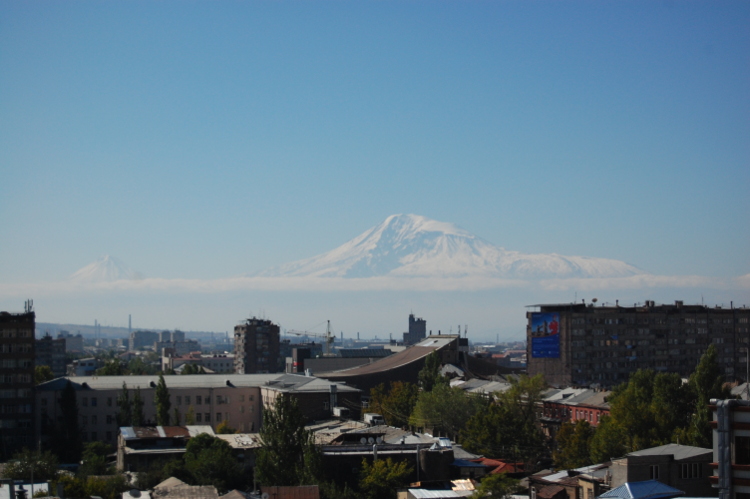
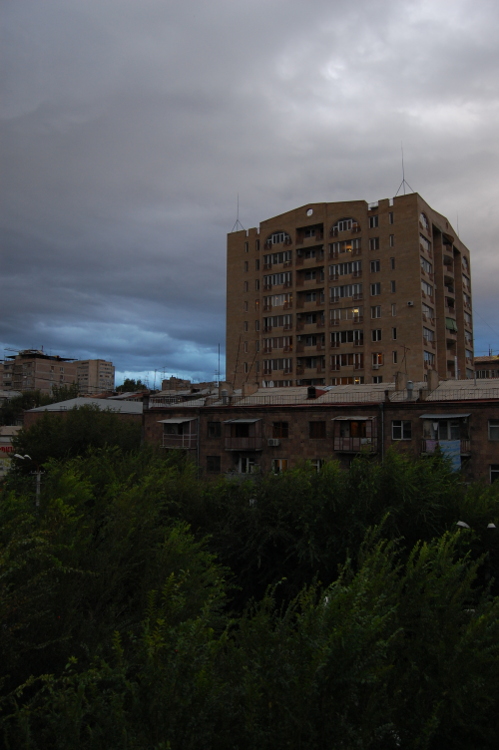
So, in lieu of further writing, I’ll just share a couple pictures of the city in the country that’s doing a frighteningly good job of stealing my heart.

0100
View of Mount Ararat from Yerevan


0095
View from near Barekamutyun Station
Birthright Armenia, Musings

[Blog] Week Five, Grapes, Tea, and Borscht

BIRTHRIGHTHEADER

As another week has already flown by, I find myself grateful that the Saturday immediately following my previous post was filled with adventure, because if it hadn’t been, this entry might be a little boring. While resting at home when you’re sick tends to make you feel better, it doesn’t make for particularly thrilling writing material.

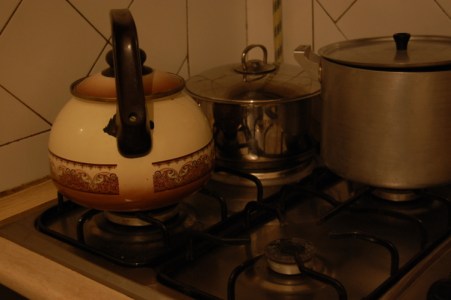
I’m not sure if it was food poisoning or a run-of-the-mill stomach bug that decided to follow me home, but either way it could have been so much worse. I mostly just had to deal with a total loss of appetite, absurdly tight muscles, and no energy whatsoever. Regardless of what it was, drowning it in tea and borscht proved effective in finally chasing it off.

0097
Pictured: Tea kettle and pots of borscht and yogurt soup, valiant defenders of queasy stomachs everywhere.

But before all that, we had another lovely excursion, this time going to the Karas Wines vineyard and the Sardarapat Memorial.

Karas Wines is a member of a company called Tierras de Armenia that was founded in 2005 by an Argentine Armenian businessman named Eduardo Eurnekian. The company acquired 2300 hectares of land (that’s over 5500 acres, or almost nine square miles) in the Armavir region of Armenia to the west of Yerevan. The gentlest phrase I’ve seen used to describe the area is “previously uncultivated”, though “desolate wilderness” has also been used and might be somewhat more accurate.* I’ll have some pictures down below that will help illustrate.

It took us about an hour and a half to cover the sixty kilometers between Yerevan and the vineyard, which meant that I got to spend an hour and a half staring out the window as the Armenian countryside rolled past, as well as a few villages. If nothing else, it gives a glimpse of all the parts of the country that aren’t Yerevan, as well as a lot of stark, ruggedly stunning landscapes.

We had a pretty good idea that we were getting close when we started seeing fields of grape vines stretching on all around us in long, orderly rows. As a girl who grew up in northern Idaho where the rolling hills are covered in fields of oat and wheat, the sight was simultaneously familiar and not. To state the obvious, grape vines are a lot bigger than grains and grasses.

0980
A view of the vineyards.


Once we got there, we found out that we were going to be helping the villagers who are employed by the vineyard as they removed the plastic protectors that had been put in place around the stems of the vines. Sleepy as I was, there was a (sizeable) part of me that felt a sudden dread. It’s one thing to be mildly sleep deprived as you take a tour and listen to people tell about what they do. It’s something else entirely to have to do something yourself.

Or, maybe, I was just feeling a little lazy and intimidated by the prospect of having to communicate in Armenian when I hadn’t expected it.

As is usually the case, it was actually a whole lot of fun. The plastic protectors were secured in place by thin metal rods which we had to find among the vines. Some of them were hard to find. Some were stuck. Some had tiny vine tendrils all wrapped around them. Each one was just a little different than the others, and it reminded me how much I miss working as a groundskeeper.

Lest I give the impression that we spent the day in the fields, each of the little groups we had split ourselves into only did one, or maybe two rows, and each row was probably only about fifty yards** long. Even though harvest was over, there were still a few clusters of grapes here and there, so we also got to eat fresh grapes and sun-dried raisins as we worked. Actually, by the time we got to the end of the row, we all had more grapes than we knew what to do with.

Afterwards, we were treated to a lunch of (massive) sandwiches, and we spent the next while just hanging out together and talking. There was even a little bit of dancing as a couple of the more knowledgeable volunteers taught some of the rest of us a Armenian folk dance or two.


After that, our excursion leaders somehow managed to herd us back onto the buses so that we could take the tour, and we got to learn a bit about the vineyard and what had gone into creating it. I’ll try to hit a few of the highlights.

I mentioned above that the land was a mix of “previously uncultivated” and “desolate wilderness”. What that actually means is that the ground was so rocky that no one had thought that it would be worthwhile to clear it for agricultural purposes. This is one of those times when pictures really are worth a thousand words.


All those rocks you see right there are just the tiniest fraction of the ones they pulled out to clear the ground, and this is not the only pile like it. Additionally, these pictures don’t show the massive boulders that have been removed from under the surface, or the fact that they are still pulling rocks from the fields every year, or that the 230 hectares that have been cultivated so far only represent about a tenth of the total land that will need to be cleared in this way in order to become useful for growing grapes.

The entire endeavor is more than a little incredible. Add to that the fact that Armenians have been making wine for a very long time, and it’s as much a link to the past as a way to look to and provide for the future: Karas employs hundreds of people from the surrounding area, and has chosen to go without certain machinery that would make the process more efficient at the cost of jobs. They are focused on sustainability, using dripline to minimize water waste and organic solutions (pheromones imported from Germany) for pest control as opposed to chemical methods.

From there we went on to the Sardarapat Memorial that commemorates the battle of the same name fought in 1918 to stop the advance of the Ottoman Empire across the rest of Armenia. They were already in its heartland. The Armenian army consisted mostly of volunteers, pitted against the trained Ottoman troops. If they had failed, it’s possible that it would have meant the destruction of the Armenian nation.

The memorial itself is beautiful: two massive winged bulls made of reddish stone and a 26-meter tall trellis structure built of the same stone and hung with twelve bells that are rung every year on the anniversary of the victory. There is also a path edged with stone eagles and a curved victory wall, as well as a beautiful museum containing all kinds of items of Armenian history. I’ve got a few pictures of the monuments, but they hardly do it justice. If you ever have the chance to come to Armenia, I would highly recommend visiting it for yourself.


That’s all for this week. I feel like I’ve talked forever this time, but as always, there’s so much more that I haven’t said, and I can only hope that I’ve provided a decent summary. As always, thanks for reading, and let me know if you’ve got any specific questions or want more details on anything. I’d be happy to provide!


* There’s a folktale I ran across regarding how the Armenians ended up with the particular plot of land that is now known as Armenia. I had a heck of a time finding it when I went looking, and didn’t succeed until I’d already rewritten it, so I’ll leave my retelling down below as well as linking to the post where I found it originally.

Back when God was dividing up the earth among the peoples of the earth, the Armenians were late, as happens often enough.

“You should have come earlier,” said God. “Because now there is no land left for me to give you!”

But the Armenians pleaded with God, asking for anything, any scrap of land that he had left that he could give to them to live on. Finally, worn down by their endless cries, God relented.

“Fine!” he said. “You win! But I have nothing left but this little rocky piece of land that wasn’t fit to give to anyone. Do with it what you will.”

So the Armenians took it and built on it and cultivated it and turned it into a place where they could live, and that’s why Armenia is the way it is.

As it turns out, the Armenians weren’t the only ones who were late, and once God had given the Armenians their land, the Georgians came up to him and asked if they could have a piece of land to live on as well.

God frowned and said, “You should have come much earlier! I’ve just given the last piece of land to the Armenians and have nothing left to give you.”
But the Georgians begged and pleaded with God as well, until at last he threw up his hands and relented.

“Here, take this! I had reserved a small piece of paradise for myself, but since you will not give me any peace until I give you a little land, I will give it to you.”

And that is why Armenia is rocky, mountainous, and hard, and why Georgia has beaches and forests and the Black Sea.


** I should mention here that I am notoriously bad at estimating distances. Please take all attempts with a grain or ten of salt.

Updates

[Update] October 2017

HEADER

It’s October!

This is just going to be a quick update this time, mostly because there’s not a whole lot new to talk about regarding my various writing projects. I’ve still been writing– it just hasn’t been going very quickly. Something about international travel and navigating a new culture. Go figure!

I mentioned a couple of weeks back that I’d finished the first draft of a short story, and I’m still working away on it. At this point, I’ve probably got a third or a fourth of the second draft done, and I’m liking what it’s looking like. I hesitate to give an estimated time of completion, but I’m hoping to post it up in the next week or so. We’ll see!

In addition to that, I’ve got a couple of other ideas in the works, one of which should just be a simple, fun idea that will write itself easily enough. Of course, I’ve been wrong about that before, but here’s hoping.

In the meantime, I’ll keep posting up Friday updates on my Armenian adventure, so be sure to let me know if there’s anything you want to hear more about! Until then, all the best!